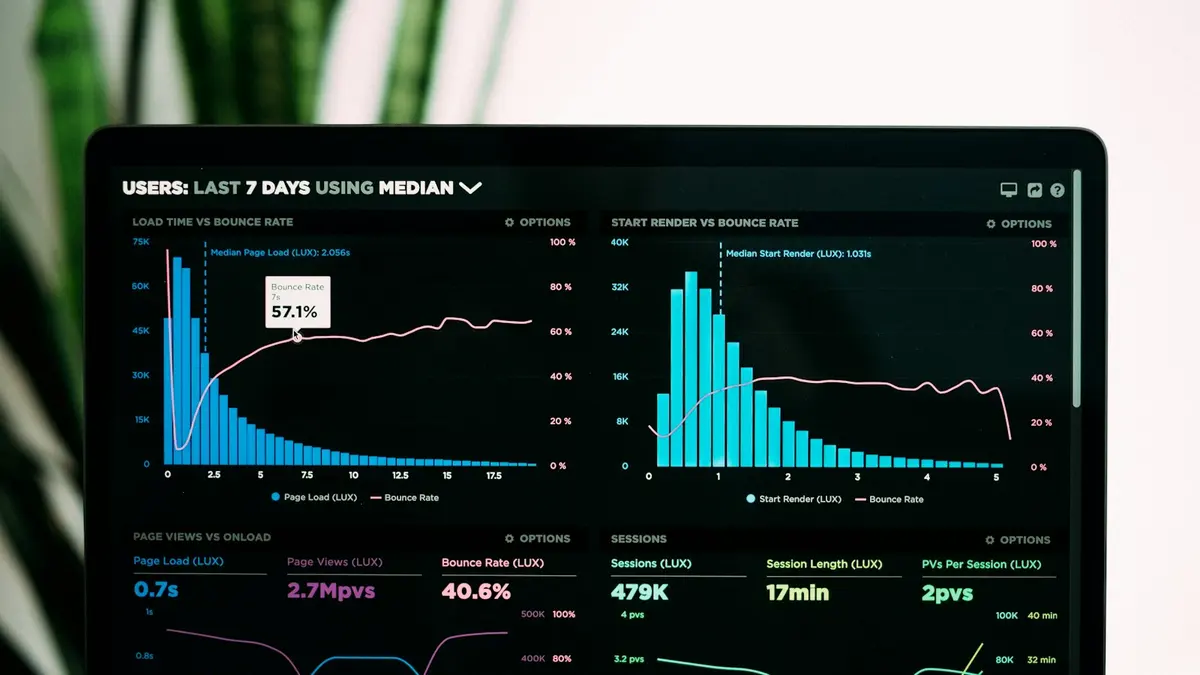
Candidate and listing counts from the MyInternships.in database, 21 November 2026.
Where can I hire AI, machine learning and data science interns in India?
MyInternships.in handles both posting and sourcing. At /hire-talent, a two-minute chat with the AI hiring assistant turns your brief into a draft listing, with title, description and skills shown in a live preview; it is published after company verification and open to 2 lakh+ registered students and freshers. Use a precise title (analyst, data engineer, ML or GenAI) and test the shortlist on an anonymised dataset. For proactive sourcing, try AI candidate search at /hire#plans.
What is MyInternships.in for heads of data and analytics?
- What it is
- An India-focused internship and fresher-jobs platform where employers post openings and hire students and recent graduates.
- Who it is for
- Heads of data and analytics, data science and ML engineering managers, AI startup founders, BI and product analytics teams, applied research groups in companies, HR and talent acquisition teams hiring analytics talent.
- What you can post
- Internships, graduate trainee roles and fresher jobs: office, hybrid or remote, in any Indian city.
- Candidate pool
- 2 lakh+ registered students and freshers (21 November 2026).
- Trust
- Every company is verified before any listing goes live.
- Cost
- Free listing for paid roles from ₹8,000/month; Starter ₹999 (incl. GST); Growth ₹1,999 + GST; Enterprise on request.
- Get started
- Post on /hire-talent in a 2-minute AI-assisted chat.
Analyst, data engineer, ML or GenAI: choose the title that matches the work
The title 'data science intern' is often used for work that is really reporting. A dashboard job advertised as data science attracts applicants who expect to train models and soon lose interest; a modelling job advertised as analytics misses them altogether. Decide what the intern will hand over in the final week (a report, a pipeline, a model or an LLM feature) and pick the title from that. A precise title is the simplest way to hire data science interns whose skills fit the work.
| Role | Skills to test | A project that fits an internship |
|---|---|---|
| Data analyst | SQL joins and aggregations, Excel, pandas, descriptive statistics | Answer one recurring business question with a reusable query and a one-page memo |
| BI analyst / developer | Power BI or Tableau, DAX, data modelling, SQL | Turn one team's manual spreadsheet report into a refreshable dashboard |
| Data engineer | SQL, Python, ETL/ELT, Airflow, Spark, a cloud warehouse | Build one scheduled pipeline with data-quality checks and alerts |
| Data scientist / ML | Statistics, scikit-learn, feature engineering, validation design | A baseline model evaluated honestly against a simple business rule |
| GenAI / LLM application developer | Python, LLM APIs, prompt design, RAG, vector databases, evaluation | An internal Q&A prototype over approved documents, with a test set of questions |
| MLOps | Docker, CI/CD, experiment tracking, model monitoring | Package an existing model with versioning, tests and a drift check |
Test Python, SQL and statistics on data that looks like yours
Generic quizzes reward memorisation. Build a small exercise from a synthetic or anonymised extract of your own data instead, complete with the problems your team actually meets: missing values, duplicate rows, inconsistent date formats and a column nobody has documented. Ask three or four business questions and require answers as SQL or a notebook, plus a few plain-language sentences. Send it yourself and review every answer against the same rubric.
Statistics separates analysts who report numbers from those you can trust with decisions. In the interview, show a chart where a metric rose after a product change and ask what else could explain the rise.
- Analysts: window functions, grouping, and explaining a result to a non-technical manager
- Data engineers: incremental loads, idempotent jobs and how they would catch bad input
- ML candidates: train-test splits, data leakage and choosing a metric for imbalanced classes
- GenAI candidates: measuring answer quality and handling hallucinated or outdated answers
See also: Data science intern job description

Look past course certificates to the project behind them
Data résumés frequently carry a row of online course certificates. They show interest and exposure, not the ability to work with messy business data. Ask each shortlisted candidate to walk you through one project for fifteen minutes: where the data came from, what they cleaned, which baseline they compared against, which metric they chose and why, and what failed.
Projects built only on classic teaching datasets such as Titanic, Iris or MNIST prove that a tutorial was followed. Give more weight to work where the candidate collected or combined data, reported results on held-out data, analysed errors and wrote down limitations. Competition rankings show modelling skill but rarely data cleaning or stakeholder communication. For GenAI projects, ask how outputs were evaluated: a demo without a test set is a prototype, not evidence.
- Which part did you build yourself, and which came from a course template?
- What would you change with another month?
- Show me a mistake you found in your own analysis.
See also: Intern interview guide for employers
Notebooks, version control and reproducible work
Notebooks suit exploration and are the wrong home for anything your team must rerun next quarter. Set norms on day one: a notebook shared with the team must restart and run top to bottom, dependencies are pinned, data sources and assumptions are noted at the top, and credentials never appear in cells. Commit to Git with outputs cleared, and move reusable cleaning or feature code into modules with a few tests.
Review an intern's SQL and notebooks the way you review application code. A second reader catches the silent errors that do the most damage in analytics: a join that duplicates rows, a filter that drops a region, or timestamps in the wrong time zone.
Data privacy: decide what an intern may see before they join
In a data internship, access is a bigger risk than skill. Personal data your company processes digitally falls under India's Digital Personal Data Protection Act, 2023, and finance or health data may carry sector rules on top. Check current requirements with your legal or compliance team, then apply least access: work from extracts rather than live systems, and get the data owner's sign-off for anything beyond anonymised data.
Write three rules into the internship agreement and the onboarding pack: no company data on personal devices, no downloads outside approved storage, and no customer records in public AI chat tools. Remove access to every dataset and tool on the final working day.
| Data tier | Examples | Intern access |
|---|---|---|
| Public or synthetic | Open government data, generated test data | From day one |
| Anonymised extracts | Aggregated metrics, masked customer tables | After a data-handling briefing |
| Pseudonymised records | Customer IDs replaced by tokens, behaviour retained | With data-owner approval, logged and time-bound |
| Identifiable personal data | Names, phone numbers, addresses, payment details | No; keep it with full-time staff |
| Production write access | Live databases, deployed model endpoints | No |
Compute, licences and AI tool access
A data intern without data or compute has nothing to do, so settle access before the start date. Decide where work will run (a laptop with enough memory, a shared notebook server, a GPU instance or cloud credits) and put budget alerts and auto-shutdown on anything billed by the hour. Confirm BI licences, warehouse logins and read access to the extracts they need.
For GenAI work, issue each intern a personal API key under a company account, with usage caps and logging. Never ask them to use their own card or a free personal account for company work. Agree which models and assistants are approved for which data: calling an external model API sends your data outside the company, so sensitive experiments run on approved infrastructure or not at all.
Scope a project an intern can finish and your team can keep
Briefs such as 'build our AI strategy' or 'train our own language model' set interns up to fail. Write a one-page brief instead: the business question, the person who will use the answer, the data available and its known gaps, a success metric, the baseline to beat and the deliverable.
Run the internship in phases: data access and exploration, a simple baseline, iteration, and a final stretch reserved for documentation and handover. A well-documented negative result, such as a model that does not beat the existing rule, is a useful outcome. If nobody on your team can review model code, start with an analyst or BI intern rather than an ML role.
- Good fits: a churn or demand baseline, data-quality checks, one team's dashboard, a retrieval prototype with an evaluation set
- Poor fits: work that needs months of labelled data first, or anything customer-facing without senior review
See also: Internship evaluation form template Hire IT and software development interns
Roles you can hire: AI & data science interns
Plans and pricing for employers
- 1 internship or job listing
- Live for 30 days once approved
- Reviewed by our team, live within 2 working days
- Only for paid roles offering ₹8,000/month or more
- Applicant contact details and resumes need an upgrade
- 5 internship or job postings
- Goes live instantly after company verification
- Full applicant contact details and resumes
- Email support
- 15 internship or job postings
- Goes live instantly after company verification
- Priority support and AI candidate matching
- Full applicant contact details and resumes
- Custom volume hiring and campus drives
- Unlimited resumes
- Dedicated sourcing team
- SLA and GST invoice
Prefer to search candidates yourself? The candidate database lets you search, then unlock resumes and contact details with credit packs of ₹999 (incl. GST) or ₹1,999 (incl. GST), each valid for 30 days. Describe the role in plain English and the AI ranks matching candidates.
Prices in INR as of 21 November 2026. Pay securely by Razorpay; a GST invoice is issued for every paid plan (add your GSTIN at checkout). Enterprise pricing on request.
How posting works on MyInternships.in
- Open the AI hiring assistant
Go to the posting chat on /hire-talent and describe the role in plain words: title, skills, city or remote, stipend or salary and openings. - Review the AI-drafted listing
The assistant drafts the title, description and skills and shows a live preview of what candidates will see. Edit anything before you submit. - Get your company verified
Every employer is verified before a listing goes live. Your website, office address and a complete company profile speed this up. - Publish and hire
Paid plans go live instantly after verification; a free listing goes live within 2 working days of review. Review applicants, shortlist and interview.
Hiring checklist
- Pick the title from the final deliverable: report, pipeline, model or LLM feature
- Build a skills exercise from synthetic or anonymised data that resembles yours
- Ask for one project walkthrough instead of counting certificates
- Classify every dataset the intern needs by tier and get the data owner's sign-off
- Arrange compute, BI licences and warehouse logins before day one
- Issue personal API keys under a company account with usage caps
- List the AI tools approved for company data and ban pasting customer records anywhere else
- Write a one-page brief with a success metric and a baseline to beat
- Require notebooks that run top to bottom, with code kept in version control
- Plan the handover so dashboards and models are maintained after the internship
Hiring locations: any Indian city, hybrid or remote
Set the city, or mark the role as remote or hybrid, when you post. City hiring desks:
Frequently asked questions
What is the difference between a data analyst intern and a data science intern?
An analyst intern answers business questions with SQL, spreadsheets and dashboards, and explains the result to decision-makers. A data science intern builds and evaluates statistical or machine learning models. If the final deliverable is a report or dashboard, title the role 'data analyst'; a data science title attracts applicants who expect to build models and may lose interest in reporting work.
How do I test SQL and Python skills before interviewing data interns?
Send shortlisted candidates a small exercise you prepare: an anonymised or synthetic dataset with realistic flaws, three or four business questions, and a request for SQL or a notebook plus a short written summary. Review every submission against the same rubric. Your team sends and scores the exercise directly.
Do online course certificates matter when hiring data science interns?
Treat them as evidence of interest, not skill. Certificates rarely show whether someone can clean messy data, choose a sensible metric or explain a result. Ask instead for one project the candidate can walk you through: the data source, the cleaning, the baseline, the evaluation and what went wrong. A modest original project tells you more than a stack of certificates.
Can a data science intern work on our customer data?
Start with synthetic or anonymised extracts, which are enough for exploration, dashboards and baseline models. Pseudonymised records can be added with the data owner's approval, logging and an end date. Keep identifiable personal data and production write access with full-time staff. India's Digital Personal Data Protection Act, 2023 applies to digital personal data, so confirm current obligations with your legal team.
What GenAI or LLM projects are realistic for an intern?
Projects with a narrow scope and a measurable outcome: a question-answering prototype over approved internal documents, a classifier that routes support tickets, or a tool that drafts summaries for human review. Each should come with an evaluation set of real questions and a way to score answers. Avoid training a model from scratch or shipping anything customer-facing without senior review.
Who should pay for GPUs, cloud credits and API usage during an internship?
Your company. Provide compute and API access through company accounts with budget alerts, usage caps and auto-shutdown for idle instances, and issue each intern their own key so usage is traceable. Asking interns to use personal cards or free personal accounts creates cost disputes and leaves company data in accounts you do not control.
Should data interns work in notebooks or write production code?
Both, at different stages. Notebooks suit exploration and analysis; anything the team must rerun belongs in version-controlled modules with tests. Require shared notebooks to restart and run end to end, with pinned dependencies and no credentials in cells. Deployment to production should go through your engineering team's normal review and release process, never straight from an intern's notebook.
Which degrees fit AI and data science internships?
Look beyond computer science. B.Tech students in AI and data science or CSE fit ML roles, while B.Sc and M.Sc students in statistics, mathematics or economics bring the statistical grounding that analyst and data science work needs. BCA, MCA and B.Com students with SQL and BI skills can do well as analysts. Judge the exercise and the project walkthrough rather than the degree name.
How long should a machine learning internship be?
Long enough to get data access, build a baseline, iterate and hand over. Shorter internships suit analysis, dashboards or data-quality work; model projects that need data collection or labelling need more time. Whatever the duration, reserve the final stretch for documentation and handover so the work survives after the intern leaves.
Can data interns work remotely if our data must stay on the company network?
Yes, with controls. Give remote interns a company-managed laptop and VPN or virtual desktop access, and have them work only on approved extracts on company infrastructure, never on local copies. If your rules do not allow remote access to the data at all, keep the role office-based or hybrid, or design the project around synthetic data that can leave the network.
Is there a free option for posting a paid AI or analytics internship?
Yes, provided the internship pays ₹8,000/month or more. The free slot covers one listing: after a manual review it goes up within 2 working days and remains open for 30 days. To see applicants' resumes and contact details, or to publish instantly, move to a paid plan; this page's plan comparison has the details.
Can I source data science candidates instead of waiting for applications?
Yes. The candidate database at /hire#plans has an AI search: write what you need as you would explain it to a colleague, say 'M.Sc Statistics graduate with SQL and Power BI, open to Hyderabad', and it ranks the profiles that match. Credit packs unlock resumes and contact details, and each pack lasts 30 days.
Should interns be allowed to paste company data into AI chat tools?
Not into public tools. Prompts sent to an external AI service leave your control, so company and customer data must stay within tools your company has approved for that data. List the approved tools in the onboarding pack, explain the reason, and put the rule in the internship agreement alongside the confidentiality clause.
Post your data or AI internship
Describe the role, the stipend and the tools your team uses in the posting chat; the listing goes up once your company is verified. Would you rather source directly? Try AI candidate search in the database.